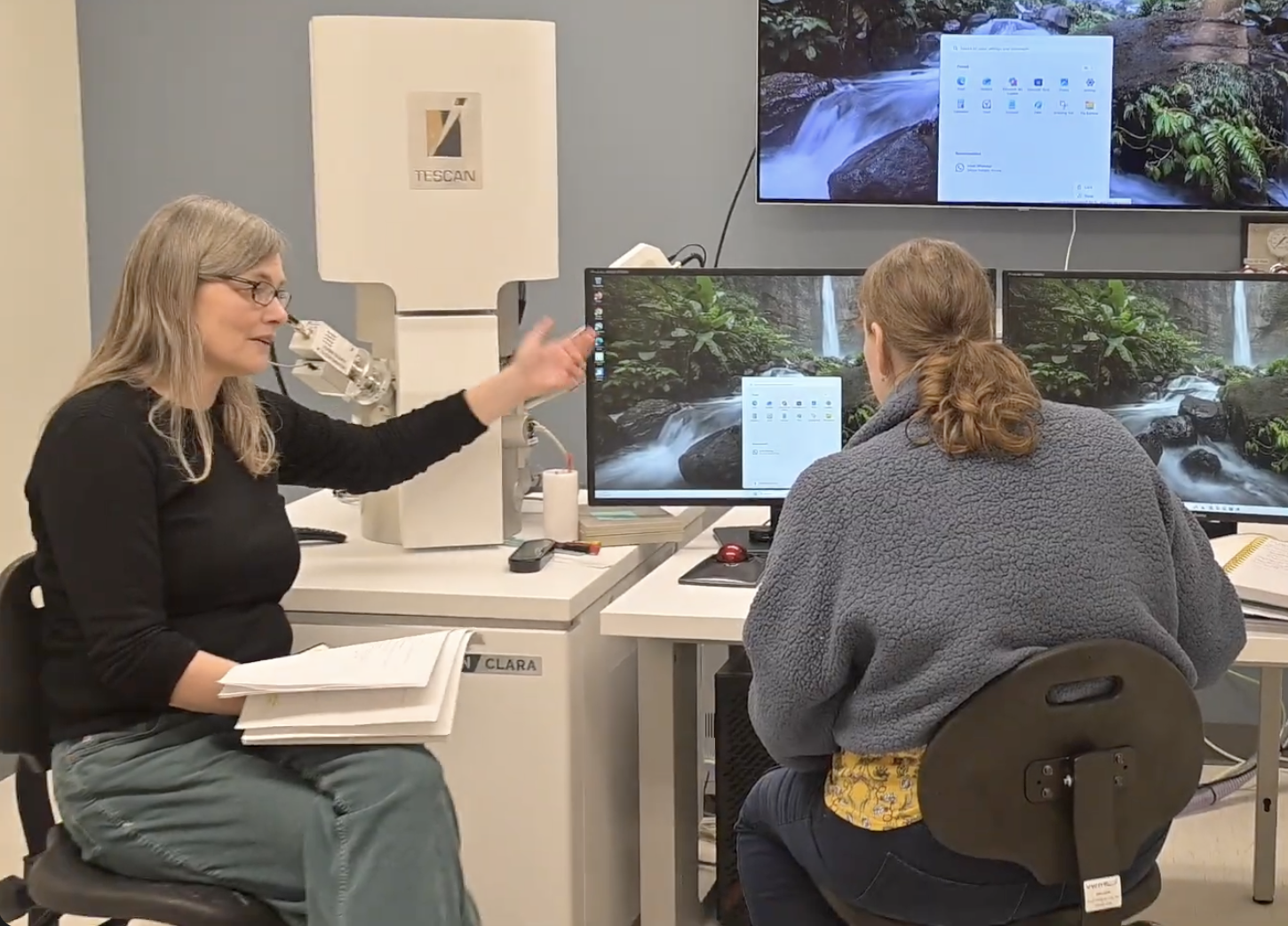
OLYMPIA, Wash. - Students at The Evergreen State College are gaining rare access to professional scientific equipment thanks to a major federal investment aimed at strengthening STEM education. This funding was made possible through a Congressionally Directed Spending appropriation championed by U.S. Senator Patty Murray (D-WA), who at the time served as Chair of the Senate Appropriations Committee. In December 2024, Evergreen received an additional round of funding totaling $217,000 from the M.J. Murdock Charitable Trust to enhance a new scanning electron microscope.
The new instruments, which are now installed in laboratories, forests, and waterways across campus, allow undergraduate students to work directly with the same technology used by researchers, environmental agencies, and industry laboratories around the world.
At many universities, equipment of this caliber is typically reserved for graduate students or faculty-led research. At Evergreen, undergraduate students are trained to use the instruments themselves, earning certifications that allow them to operate the tools independently for coursework, research projects, and senior capstones.
Looking at the Invisible
One of the most striking additions is a powerful electron microscope, capable of magnifying our view of objects more than a million times. With it, students can examine the microscopic structures of everything from fungal spores and plant tissues to mineral grains and advanced materials.
Unlike traditional microscopes, which rely on light, electron microscopes reveal structures at the scale of billionths of a meter, opening a window into the hidden architecture of cells, microbes, and materials. Students can also analyze the chemical makeup of samples at the same time, helping them understand not just what something looks like, but what it’s made of.
Additional equipment allows delicate samples like plant tissues, fungi, or aquatic microbes to be flash-frozen before imaging, so they can be studied in a state that closely resembles how they exist in nature.
Tools Used by Chemists and Forensic Scientists
Evergreen also expanded its chemical analysis laboratory with instruments that help scientists identify unknown substances and study how molecules behave. Students can now work with systems that:
- Determine the structure of molecules, an essential step in drug development and biochemistry.
- Separate and identify chemicals in complex mixtures, similar to how forensic labs analyze evidence or how environmental scientists detect pollutants in water.
- Measure extremely small amounts of metals and elements, even at parts-per-trillion concentrations, to help study water quality, geology, or human health.
These tools allow students to investigate questions such as whether local waterways contain pollutants, what compounds create flavors in food, or how scientists confirm the structure of a new pharmaceutical compound.
Turning Campus into a Living Environmental Laboratory
The forests, streams, and wetlands surrounding Evergreen are also becoming a powerful research site thanks to a network of new environmental monitoring systems.
Sensors installed across campus waterways measure conditions such as temperature, oxygen levels, and water clarity around the clock. Students learn how to deploy and maintain these instruments while collecting long-term environmental data that can reveal trends related to climate change, land use, and ecosystem health.
Additional field equipment helps students measure stream flow, map research sites with high-precision GPS technology, and monitor soil moisture and forest canopy density. Together, these tools allow students to study the health of watersheds and forests in real time.
Exploring the Carbon Cycle
Another set of instruments focuses on one of the most urgent scientific challenges today: understanding how carbon moves through ecosystems and the atmosphere.
Students can now measure how much carbon dioxide forests absorb from the air, how plants exchange gases through their leaves, and how soil microbes release and absorb greenhouse gases. These measurements help scientists understand the role forests and soils play in the global climate system.
A Unique Mycology Laboratory
Evergreen’s nationally recognized mycology program also received new equipment that allows students to grow, study, and experiment with fungi in a controlled laboratory environment.
Specialized workspaces ensure sterile conditions for cultivating fungal cultures, while instruments allow students to measure growth rates, enzyme activity, and other biological processes across dozens of samples at once. Environmental growth chambers can recreate the precise conditions needed for mushrooms to develop, allowing students to study how fungi respond to different environments.
Drones for Science, Mapping, and Storytelling
The grant also supported a fleet of drones used across environmental science, mapping, and media programs. Students train on multiple platforms ranging from beginner training drones to professional systems used for environmental surveys and aerial cinematography.
These drones can capture high-resolution imagery, measure plant health using specialized sensors, build 3-D landscape maps, and record broadcast-quality aerial video for documentary and storytelling projects.
Learning Science by Doing
Together, these instruments represent a significant expansion of Evergreen’s hands-on approach to science education.
Through structured training programs, students learn how to safely operate the equipment and interpret the data it produces. Many go on to use these tools in independent research projects or bring their experience into graduate school and scientific careers.
The equipment was funded through a federal investment designed to strengthen science education infrastructure and expand opportunities for students pursuing careers in STEM fields. All of us at Evergreen are deeply grateful to Senator Murray and the M.J. Murdock Charitable Trust for their commitment to supporting scientific research and higher education in Washington state.