About the Organic Farm

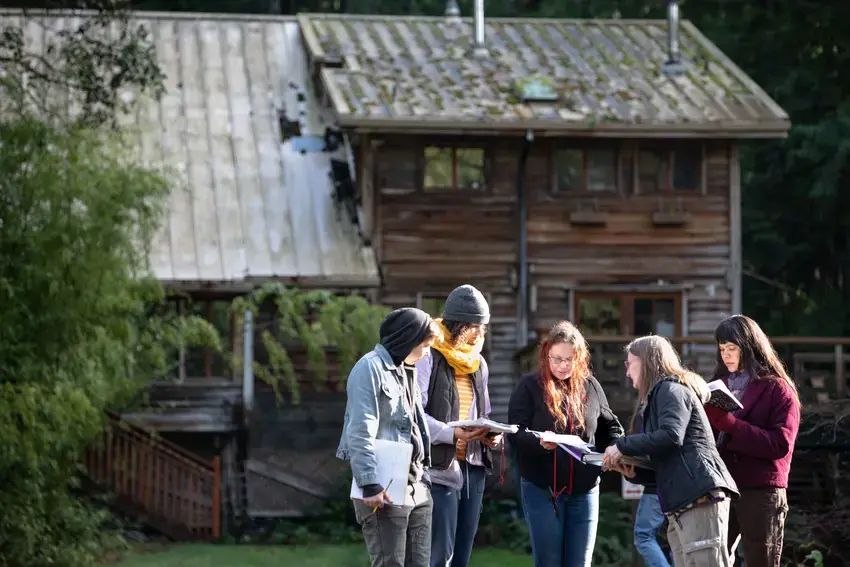
Connected to Olympia Campus by two trails through the forest, Evergreen's Organic Farm is a working small-scale USDA-certified organic farm and a learning laboratory for students. The Organic Farm currently produces fruit, vegetables, eggs, chickens, herbs, cut flowers and plant starts. In recent years, it has housed several beehives. The sunny 5-acre developed area in the northwest area of Evergreen's campus includes the Farmhouse (built by students in the 1970s), 3 acres of fields and orchards, a food forest, greenhouses, a wash station, a composting facility and several outbuildings.
A Living Laboratory
Since the first growing season on the farm in 1972, students have been central to its success. Students built the Farmhouse and greenhouses in the 70s, all in the absence of permanent faculty member until 1981.
The Organic Farm continues to operate as a learning laboratory through the Practice of Organic Farming program, one of several programs on Evergreen's Food and Agriculture Path.
Learn more about the Food and Agriculture Path
Sustainable Agriculture Lab
This lab space is for developing a scientific, cultural and sensory understanding of our food systems. The facility is equipped for hands-on cooking and lab activities, value-added food production, lectures and social gatherings.
Collaborations and Independent Study
Beyond curriculum, Evergreen students have taken on projects as large as constructing the Farmhouse, designing the Sustainable Agriculture Lab, expanding the orchard, designing and installing a Food Forest, and compiling the farm's history.
Summer Undergraduate Research Fellowships
The Organic Farm hosts collaborative research projects by faculty and students through Evergreen's SURF program. Each summer students and faculty design and carry out field studies where participants gather data on growth patterns, disease/insect/pest infestations, yield and flavor of numerous tomato and chicory varieties.
Student Events and Activities
Students manage a seasonal Market Stand twice a week on the Farm and on Red Square with produce students have harvested and processed for sale.
Each autumn the Farm hosts an annual Harvest Festival with booths, music, workshops and more! Open for the Evergreen community and beyond, it's a great way to celebrate the successful growing season.
Keep up to date on the Campus Calendar.